pristinegist
There is something deeply tragic about how the African dream is repeatedly mortgaged at the price of a bus ticket, a shiny jersey, and the whispered promise of “Europe.” The theatre of this tragedy has found its latest stage in Ilorin, the capital of Kwara State.
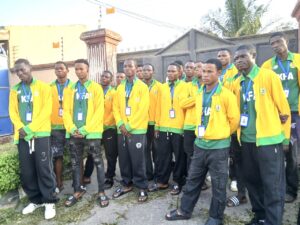
Suddenly, the city of harmony has become a hunting ground. Scouts, pseudo-agents, and self-styled “football entrepreneurs” descend like locusts. They organize flashy “scouting programmes,” prey on the hopes of poor families, and spirit away minors on the promise of contracts that rarely materialize. The lure is simple: Europe awaits you. But Europe, for most of these boys, is not Madrid or Milan. It is a mushroom academy in a forgotten district of Eastern Europe, where “connections” replace structure, and exploitation replaces opportunity.
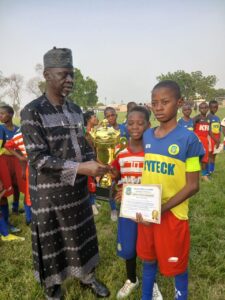
Kwara Football Association and the State Sports Commission must now decide whether to be silent witnesses or active protectors. For grassroots clubs—those fragile nurseries of hope in Akerebiata , Taiwo, and beyond—are being stripped bare. Years of sacrifice by local coaches, community patrons, and parents are undone in one swoop when a boy is lured away, undocumented, unprotected, and uneducated.
Football is not just a game. It is law, it is policy, it is ethics. FIFA has been clear about this. Article 19 of the FIFA Regulations on the Status and Transfer of Players expressly prohibits the international transfer of players under the age of 18, save for narrow exceptions: when parents move for non-football reasons, when the transfer is within the EU/EEA and the player is 16–18, or when the club is within 50km of the border. None of these exceptions applies to the child whisked from Ilorin to a dubious academy in some Balkan outpost.
Beyond Article 19, Article 18bis of the same Regulations warns against third-party influence, reminding us that minors are not commodities to be bought, sold, or loaned like goats at Oja Oba market. Player privacy, parental consent, and the right to education are all enshrined in FIFA’s guidelines and international child protection conventions. Yet in Ilorin, too many parents sign away their children with nothing more binding than a handshake and a prayer.
The danger is not abstract. We have seen it before. Boys leave their families, abandon schooling, and end up stranded in camps where there is no structured league, no welfare, and no real pathway to professional football. Their dreams wither in anonymity, and they return home broken—sometimes physically, often psychologically. Worse still, some never return.
Kwara’s grassroots deserve better. The state FA cannot continue to treat indiscriminate scouting as harmless enthusiasm. Every scouting programme must be regulated. Background checks must be mandatory. No foreign agent should be allowed to operate without verifiable credentials, approved contracts, and safeguards for the child’s education and welfare. The FA and Sports Commission must set up a joint task force to vet programmes, enforce FIFA’s laws, and hold violators accountable.
Because what is at stake is not just football. It is the dignity of the child. It is the sovereignty of the community. It is the right of a people to say: our talent will not be plundered under the guise of opportunity.
In Kwara today, we are faced with a choice. Either the FA rises to the call of history and becomes the custodian of its grassroots, or we watch as Ilorin is reduced to a quarry where dreams are mined, sold cheap, and abandoned.
For in the end, the protection of talent is not charity. It is governance. It is responsibility. It is justice.
About The Author