No Room for Rainbow Coalition in Kwara as Presidency Backs APC Structure By Olaide Ahli
 pristinegist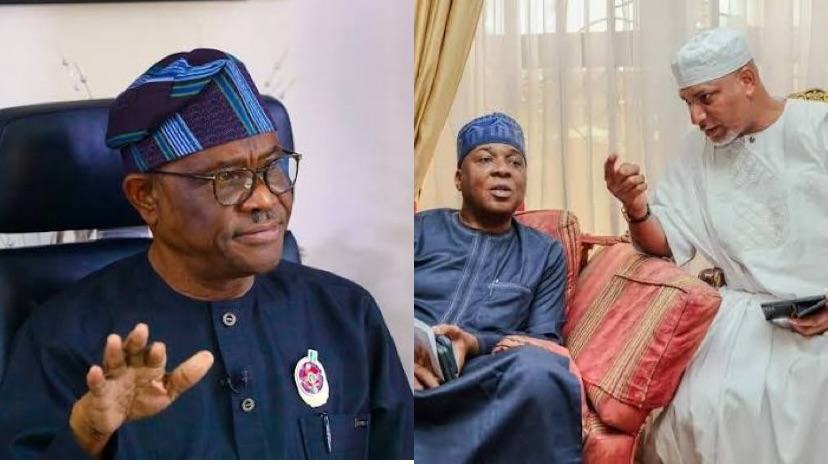
The much-talked-about “Rainbow Coalition” appears to be running into a hard political reality in Kwara State: the federal political equation is not as open-ended as some of its promoters may have hoped.
Since the political crisis that reduced Nyesom Wike’s room for manoeuvre largely to Rivers State and Abuja, there have been renewed attempts by opposition figures and political actors to explore a rapprochement with the Presidency. In Kwara, the calculation appears to revolve around whether a federal alliance can be used to strengthen the Peoples Democratic Party (PDP) and challenge the governing All Progressives Congress (APC).
But there is a fundamental problem with that strategy.
President Bola Ahmed Tinubu has consistently positioned himself as the leader of the APC while remaining open to receiving politicians from across the political divide. There is an important distinction between welcoming politicians into the political family and abandoning a party structure that is already governing successfully in a state.
For Kwara, that distinction matters.
Governor AbdulRahman AbdulRazaq has remained firmly within the APC structure and has built a political relationship with the Presidency that has produced a strong alignment between the state and the federal government. From infrastructure and economic initiatives to education, health, youth development and other areas of governance, the AbdulRazaq administration has consistently presented Kwara as a state working in partnership with Abuja rather than in confrontation with it.
This is where the Rainbow Coalition argument begins to lose steam.
The Abuja Factor
Political alliances are rarely built on sentiment alone. They are built around interests, structures, trust, and political calculations.
Those seeking to revive the PDP’s fortunes in Kwara may believe that a federal endorsement or accommodation could change the state’s political equation. But Abuja cannot simply be treated as a political shortcut for dismantling an existing APC structure.
The Presidency can welcome opposition politicians. It can work with individuals who decide to support the President’s agenda. It can even accommodate former political opponents.
But that does not automatically translate into a federal directive to undermine APC governors or dismantle the party’s structures in states where the APC is already in government.
That is the difficult reality facing those promoting a Rainbow Coalition in Kwara.
The Seriki Question
Ambassador Abdulfatai Yahaya Seriki has also become an important piece on the political chessboard.
There have been efforts by different political interests to persuade political actors within the APC ecosystem to reconsider their positions and join the emerging opposition arrangement. But politics is ultimately about choices, consequences, and political timing.
The postponement of political events, disagreements among political actors, or other temporary developments may generate speculation, but they do not necessarily amount to a fundamental political realignment.
Seriki, like every other political actor, understands that moving from one political camp to another is not a decision to be taken merely because of pressure or temporary disagreements.
There is also a bigger question: what exactly is the political destination of the proposed Rainbow Coalition in Kwara if the Presidency remains committed to strengthening the APC structure?
That question deserves an answer.
Saraki and the PDP’s Difficult Assignment
The return of Bukola Saraki and his allies to the centre of Kwara’s political conversation is understandable. The former Senate President remains an influential political figure with a long history in the state.
But influence is not the same as control.
The political environment of Kwara has changed considerably since the years when one political family could exercise near-total control over the state’s political machinery.
Today, the APC has an incumbent governor, an established state structure and a direct relationship with the federal government.
That makes the idea of rebuilding the PDP through a federal backdoor considerably more complicated.
The PDP may continue to court APC politicians. It may continue to speak with influential individuals. It may continue to explore alliances.
That is politics.
But political conversations do not automatically become political victories.
AbdulRazaq’s Biggest Advantage
Governor AbdulRahman AbdulRazaq’s greatest political advantage may not simply be his incumbency. It is the fact that Kwara’s government is politically aligned with the administration at the centre.
In Nigerian politics, the relationship between state and federal governments matters.
A governor who belongs to the same party as the President operates within the same political structure, shares access to the party’s national leadership and can directly participate in the political architecture of the ruling party.
This does not mean that every APC politician must agree on every issue. Nor does it mean that the governor’s position is immune from political competition.
It simply means that those attempting to dislodge the APC government in Kwara face a much bigger task than assembling disgruntled politicians and giving the arrangement a colourful name.
Rainbow Without Abuja?
The real test for the proposed coalition is therefore straightforward:
Can the Rainbow Coalition defeat the APC in Kwara without the active political cooperation of the Presidency?
That is the question its promoters must answer.
If the answer is no, then the coalition has a serious structural problem.
And if the answer is yes, they must demonstrate where the grassroots structure, political machinery and broad-based support required to achieve such a feat will come from.
For now, the APC has what opposition parties ordinarily desire: the government, the structure and the federal connection.
The PDP has history, personalities and ambitions.
But elections are not won by history alone.
They are won by organisation, alliances, credibility, grassroots mobilisation and the ability to convince voters that a change of government will improve their lives.
For Governor AbdulRahman AbdulRazaq and the Kwara APC, the emergence of another opposition coalition may therefore be less frightening than its promoters imagine.
The Rainbow may be colourful. But without the political storm needed to produce a change of government, it may remain only a rainbow visible in the political sky, but never touching the ground.
About The Author