pristinegist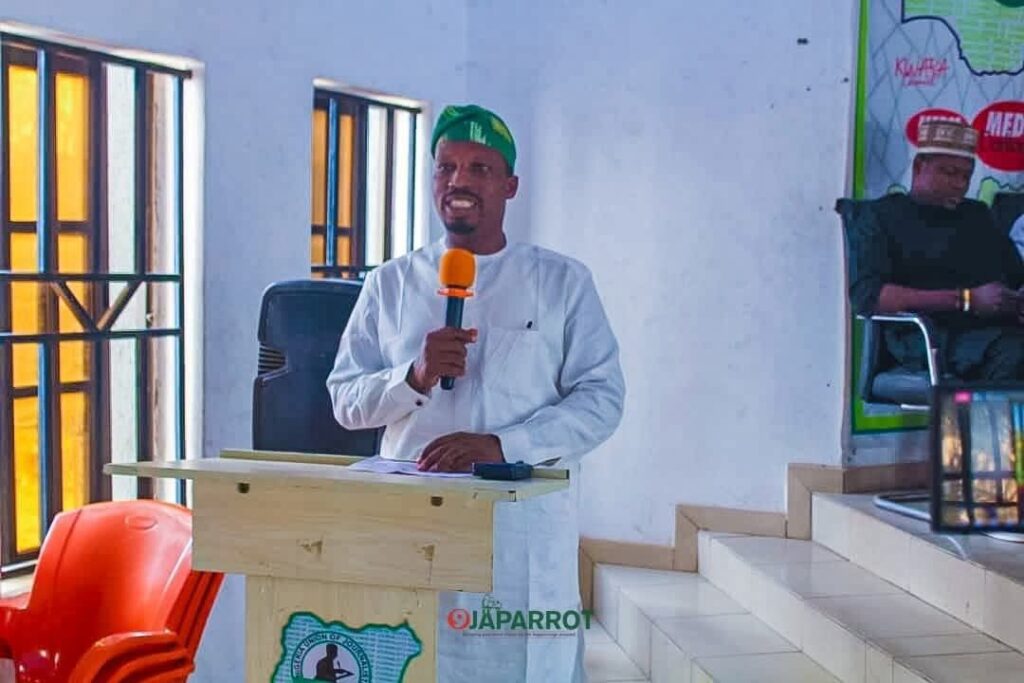
As political activity intensifies ahead of the 2027 General Elections, the Deputy Director of the Institute for Legislative Studies at the University of Ilorin, Dr. Rafiu Bakare, has called on Kwara-based journalists to uphold professionalism, objectivity, and ethical standards in political reporting.
Dr. Bakare made the call on Friday at the maiden media roundtable organized by the Association of Kwara Online Media Practitioners (ASKOMP), held at the Nigeria Union of Journalists (NUJ) Press Centre in Ilorin.
The roundtable, themed “Kwara 2027: Media, Politics, and the Search for Credible Leadership,” brought together journalists, academics, and political stakeholders to examine the role of the media and democratic principles ahead of the polls.
In his presentation, Dr. Bakare cautioned media practitioners against allowing personal emotions, sentiments, and value judgments to influence political analysis. He stressed that credible journalism is essential for informed political participation and good governance.
He warned that, with the growing influence of digital platforms, misinformation and sponsored narratives could easily shape public perception if journalists fail to prioritize accuracy, balance, and verification.
“Objectivity remains the foundation of credible journalism. The media must strengthen democracy, not undermine it through biased or sentimental reporting,” he stated.
Also speaking at the event, the Acting Director of the Kwara State University (KWASU) Centre for Politics and Corporate Governance, Dr. Ibrahim Ogirima Salawu, emphasized the importance of zoning in Nigeria’s political landscape.
Dr. Salawu described zoning as a principle rooted in natural justice and inclusivity, noting that it gives different segments of society a fair opportunity to participate in leadership.
According to him, zoning plays a significant role in consolidating democracy and promoting equity in governance, particularly in a diverse political environment like Kwara State.
However, he cautioned that zoning must not be pursued at the expense of competence and credibility.
“Zoning should produce capable and credible leaders. Where it fails to deliver good governance, it should not be upheld at all costs,” Dr. Salawu said.
The ASKOMP Chairman, Comrade Salihu Shola Taofeeq, in his opening remarks, noted that the roundtable was convened to encourage self-reflection among journalists as political alignments, propaganda, and early campaign narratives begin to emerge across the state.
The event marked ASKOMP’s first formal engagement focused on preparing media practitioners and stakeholders for responsible participation in the 2027 electoral process in Kwara State.
About The Author